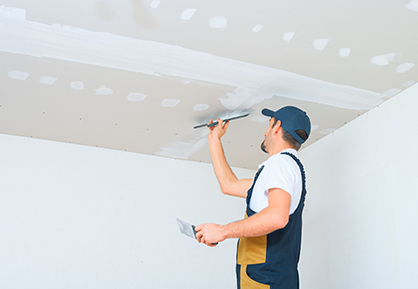
Drywall has become a staple in the construction industry due to its ease of installation, affordability, and ability to create smooth and even surfaces.

What is Drywall? Drywall is a panel made of gypsum plaster pressed between two thick sheets of paper. Gypsum is a soft sulfate mineral that is widely used in construction for its fire-resistant and soundproofing qualities. The outer layers of paper provide strength and durability to the panel.
Drywall has become a staple in the construction industry due to its ease of installation, affordability, and ability to create smooth and even surfaces.
Drywall consists of :
Gypsum Core: The inner layer is made of gypsum, a natural mineral known for its fire-resistant properties. This core provides stability to the panel.
Paper Backing: The gypsum core is sandwiched between two layers of heavy paper. The paper provides a smooth surface for painting or wallpapering and adds strength to the overall structure.
Types of Drywall
There are several types of drywall, each designed for specific applications
Regular Drywall: Used for most walls and ceilings in residential and commercial buildings.
Fire-Resistant Drywall: Contains additives that increase its resistance to fire. Commonly used in areas where building codes require enhanced fire protection
Moisture-Resistant Drywall: Designed for areas with high humidity, such as bathrooms and kitchens, to prevent mold and mildew growth.
Soundproof Drywall: Incorporates additional layers to reduce sound transmission between rooms. Installation Process Installing drywall is a straightforward process, but it requires precision and attention to detail.
The typical steps include:
Measuring and Cutting: Measure the wall or ceiling, and cut the drywall panels to fit the space.
Hanging: Attach the drywall panels to the wall or ceiling studs using screws or nails.
Taping and Mudding: Apply joint tape and joint compound (mud) to create smooth, seamless joints between panels.
Sanding: Once the mud is dry, sand the surface to achieve a smooth finish. Priming and Painting: Prime the drywall surface before applying paint or wallpaper.
Common Applications
Drywall is used in various applications, including:
Interior Walls: The most common use of drywall is for interior walls in residential and commercial buildings.
Ceilings: Drywall is often used to create smooth and finished ceilings. Partitions: It is used to divide large spaces into rooms or sections.
Fire Barriers: Fire-resistant drywall is employed in areas requiring enhanced fire protection.
Soundproofing: Soundproof drywall is used in spaces where noise reduction is essential.
Starnes Construction Company will turn your vision into reality. From design consultation to installation, find the right experts to guide you through the entire process. .